Playwright, WebdriverIO, and Cypress are currently the top testing frameworks. They’re always adding new features because of the competition. If you’re an automation or software development engineer, it’s crucial to stay on top of the latest functionalities. This article will give you the latest updates from 2026.
Cypress
14.5.3 | 15.9.0
Major changes
- Cypress 15 introduced breaking changes
- Dropped Node.js 18 & 23
- Dropped legacy Linux (glibc < 2.31)
- Removed Firefox CDP support
- Webpack 4 no longer supported
Key features added
- Cypress Studio enabled by default
- AI-assisted test creation (Studio)
- Expanded cy.press() key support
- experimentalRunAllSpecs for component testing
- Component testing support for Next.js v16 and Angular v21
Performance & stability
- Faster and safer visibility checks
- Improved DNS handling
- Fewer UI freezes and runner crashes
Tooling & UX
- Selector Playground available outside Studio
- Command log improvements and new flags
- Better exit-code handling for CI
Security & maintenance
- Multiple dependency and CVE fixes
- Updated Electron, Chromium, and Node
Playwright
Version 1.54 | 1.57
Major changes
- Chrome for Testing replaces Chromium by default (no functional impact expected)
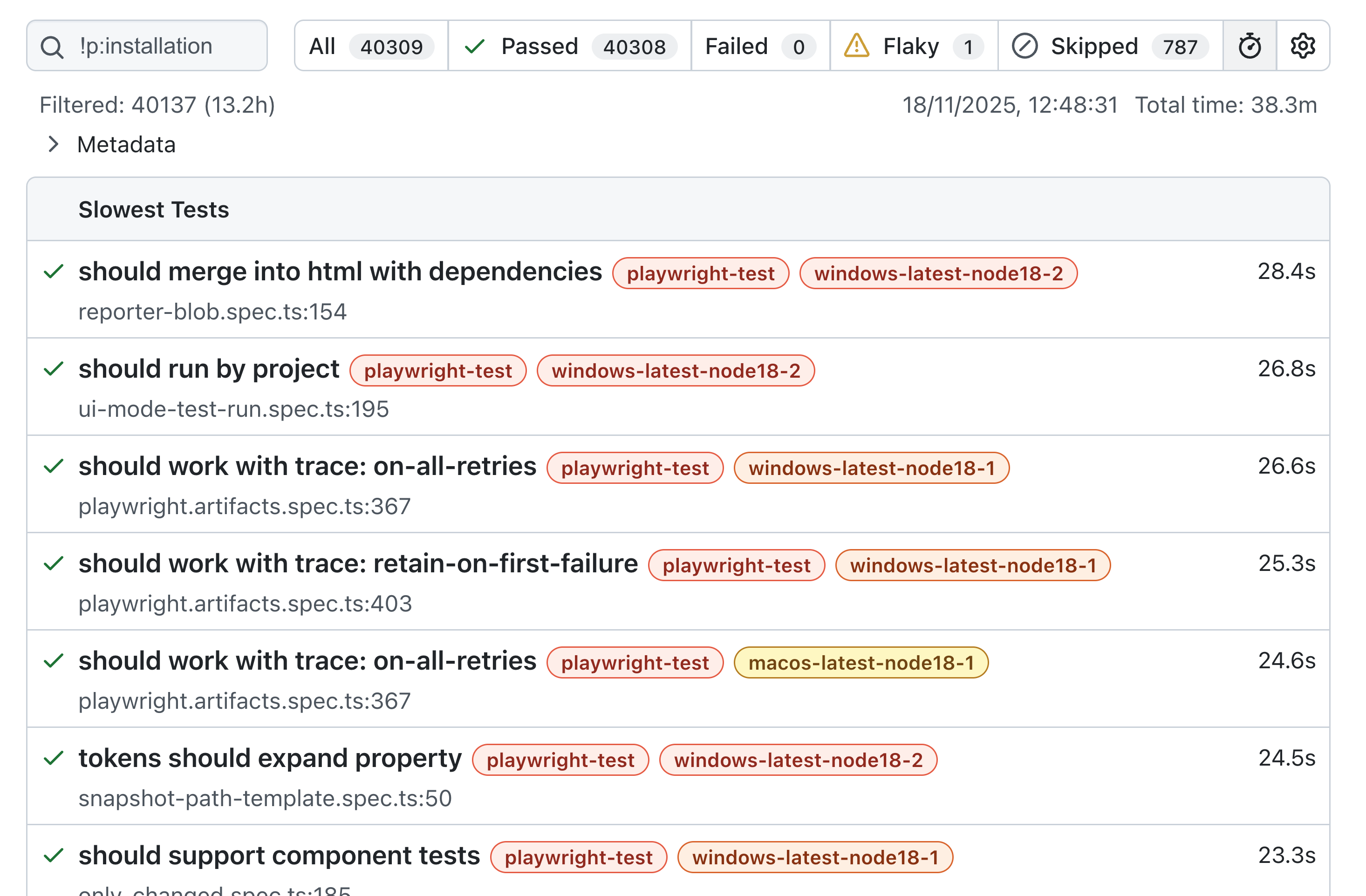
- Speedboard added to HTML reporter for identifying slow tests
- Web server startup can now wait for log output via regex
1
2
3
4
5
6
7
8
9
10
import { defineConfig } from '@playwright/test';

export default defineConfig({
  webServer: {
    command: 'npm run start',
    wait: {
      stdout: '/Listening on port (?<my_server_port>\\d+)/'
    },
  },
});
- Strong push toward AI-assisted testing with Playwright Test Agents
Breaking changes
- Removed page.accessibility API (use Axe or similar tools)
- Removed browserContext.on(‘backgroundpage’)
- Dropped support for Chromium extension manifest v2
New capabilities
- Test tagging via testConfig.tag
- Better worker, Service Worker, and network observability
- Improved locators, mouse interaction control, and diagnostics APIs
- Automatic toBeVisible() assertions in Codegen
Tooling & UX
- Enhanced HTML reporter and UI Mode controls
- Unified test list, snapshot handling, and single-worker UI runs
Platform & maintenance
- Debian 13 support
- Updated browser engines (Chromium, Firefox, WebKit)
Webdriver IO
v9.18.4 | 9.23.0
Major changes
- Transition and stabilization of WebdriverIO v9
- Continued improvements across BrowserStack, Appium, BiDi, and runner stability
- Strong focus on spec compliance, CI reliability, and cross-browser correctness
Key features
- BrowserStack updates reflecting product rename
(Observability → Test Reporting and Analytics) - New Appium CLI capabilities (start Appium Inspector, custom startup timeouts)
- Support for Chrome for advanced BiDi / W3C compliance
- Improved xvfb handling (auto-install, disable when needed)
- New CLI options:
- –exclude suites by name
- –test-list / –test-list-invert
- Multi-remote API cleanup (multiRemoteBrowser naming)
- Accessibility & targeted A11y scans improvements
Stability & bug fixes
- Major fixes in:
- WebDriver BiDi mode (stale elements, frames, XPath, alerts)
- waitFor* commands correctness
- Worker shutdown & memory leak prevention
- Retry, timeout, and hook execution handling
- Improved reporters:
- JUnit, Allure, Jasmine, Mocha correctness
- Better handling of Service Workers, shadow DOM, and mobile contexts
Breaking / notable changes
- Dropped legacy behaviors and deprecated APIs across v9
- Changed defaults and stricter W3C WebDriver compliance
- Manifest v2 extensions deprecated earlier (already enforced)
- Some renamed APIs and stricter config validation
Tooling & UX
- More robust CLI behavior in CI
- Improved logging, debugging, and error reporting
- Better handling of dynamic specs and multi-capability runs
- Cleaner docs and updated third-party integrations
Platform & maintenance
- Regular dependency and browser engine updates
- Security fixes and credential-leak prevention
- Internal refactors for long-term maintainability
Thanks to everyone who read this article, I hope you found it useful.